
Commodities
Unlock gold with Commodities
Trade on assets from the market that moves the world –
Commodities. Strengthen your portfolio by trading CFDs or
Options on gold, precious metals, and oil.
Why trade Commodities with Quantura

Inflation hedge
Protect your portfolio with assets that historically rise in value during inflation.
Zero commission trades
Maximise your potential returns without worrying about extra fees or costs.

Swap-free trading, no overnight fees
Focus on market movements without worrying about overnight charges.
0%
Commission
0
Swap fees
0.01
Minimum size
1:1000
Maximum leverage
Commodities instruments available on Quantura
Precious Metals
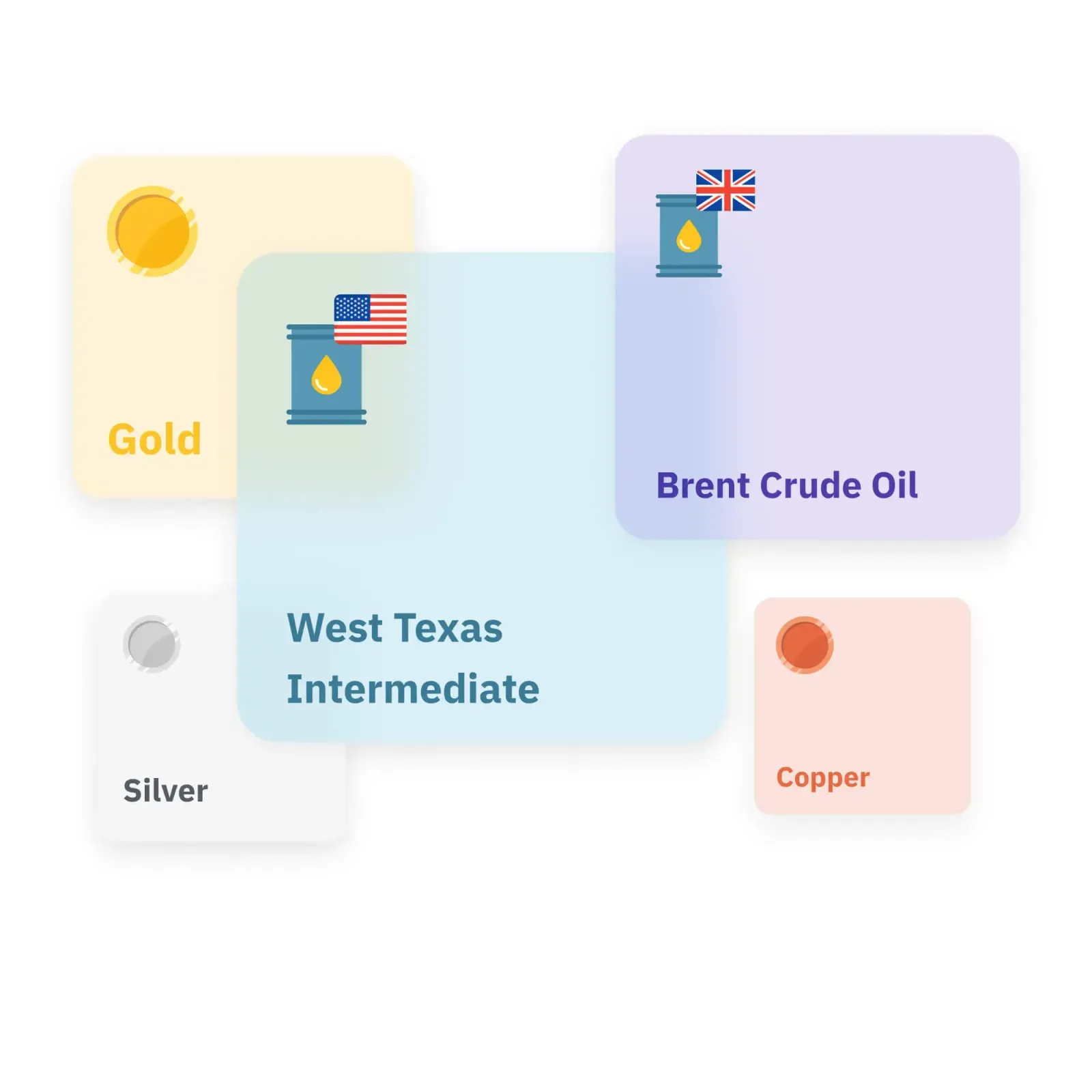
Precious Metals like gold and silver are vital indicators that often reflect market sentiment.
Base Metals
Base Metals like copper and lead drive global industry and development.
Natural Energies
Trade crude oil and speculate on price movements shaped by global events and geopolitics.
Soft Commodities
From coffee to cotton, Soft Commodities offer trading opportunities driven by weather and global demand.
Frequently Asked Questions
Commodities are raw materials or primary agricultural products that can be bought and sold, such as gold, oil, and wheat. They are typically traded on commodity exchanges.
- Commission: A fee charged by brokers for executing trades.
- Spread cost: The difference between the bid and ask price, which is the cost of placing a trade.
- Account fees: Some brokers charge fees for maintaining an account or for additional services.
Start trading Commodities today
Use our demo account and start trading risk-free with virtual funds.