
ETFs
Build diversified portfolios with ETFs
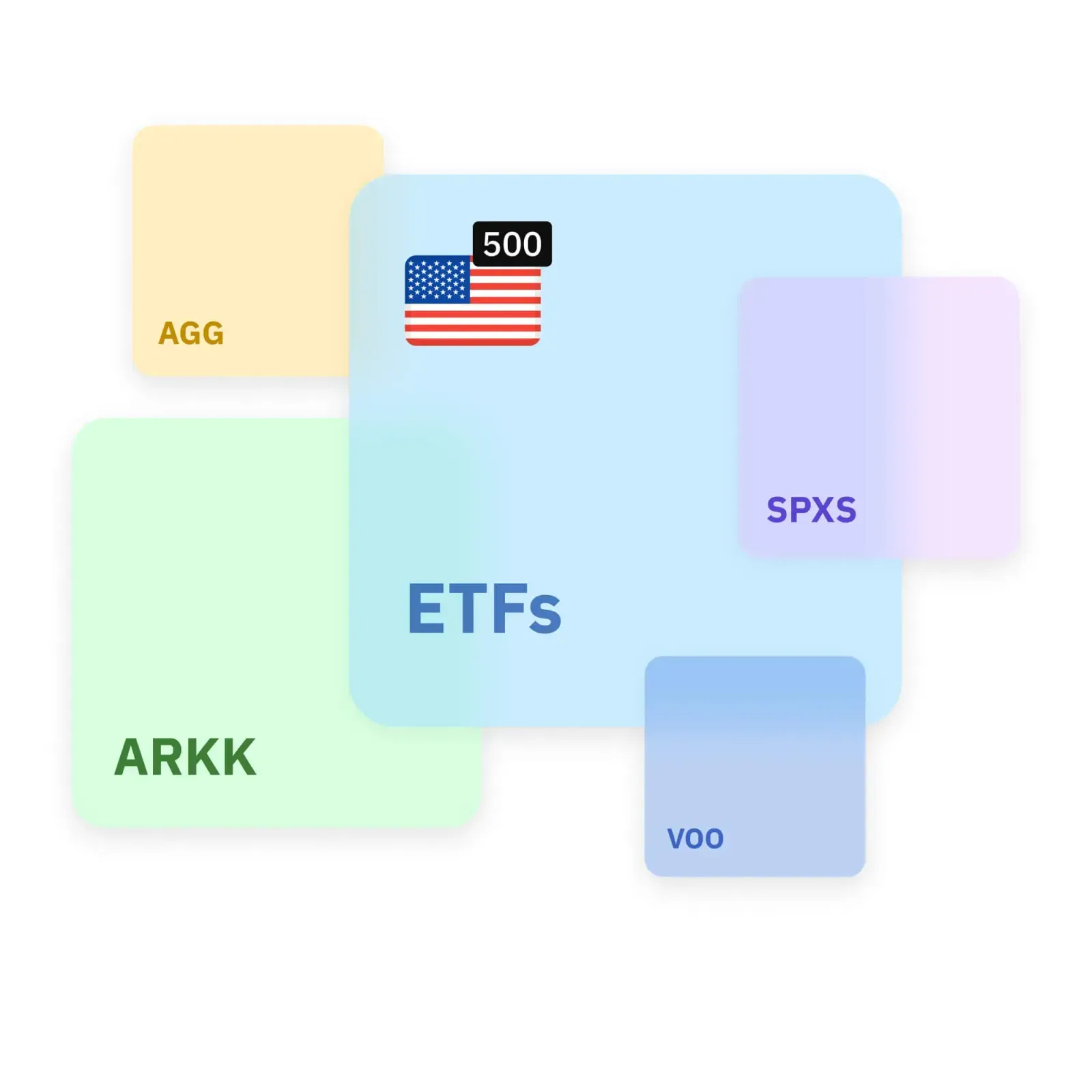
Trade a group of companies all at once with Exchange-traded
Funds (ETFs) – a one-click gateway to baskets of assets from
sectors such as tech, energy, healthcare, and more.
Why trade ETFs with Quantura
Swap-free trading, no overnight fees
Focus on market movements without worrying about overnight charges.
Controlled risk, unlimited opportunities
Set your limits and manage your trades with take profit and stop loss features.
Intuitive platforms for effective trades
Navigate markets seamlessly on our responsive, easy-to-use platforms with advanced tools. with high leverage and super tight spreads.
Easy access to your funds
Deposit or withdraw with your preferred payment method. Quick, hassle-free, on your terms.

24/7 trading
Round-the-clock access to Cryptocurrencies, including weekends and public holidays.
0.1
Minimum size
1:1000
Maximum leverage
0
Swap fees
ETF instruments available on Quantura
Asset ETFs
These instruments offer access to global markets with a single ETF — from tech giants to gold reserves.
Strategy ETFs
Optimise your ETF trades with the strategic hedging and leveraging in these instruments.
Frequently Asked Questions
Exchange-Traded Funds (ETFs) are investment funds that are traded on stock exchanges, much like stocks. ETFs hold assets such as stocks, commodities, or bonds and generally operate with an arbitrage mechanism designed to keep trading close to its net asset value.
- Commission: A fee charged by brokers for executing trades.
- Spread cost: The difference between the bid and ask price, which is the cost of placing a trade.
- Account fees: Some brokers charge fees for maintaining an account or for additional services.
Start trading ETFs today
Use our demo account and start trading risk-free with virtual funds.